Genre: Romantic Comedy (apparently)
Pages: 352
First published: 2024
Original language: English
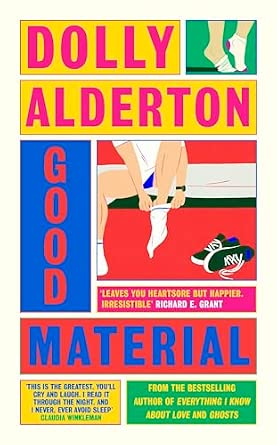
The plot: Andy Dawson is 35, and a moderately successful stand-up comedian. He’s also recently single, after his girlfriend of four years, Jen, has decided that their relationship is over. Andy regards this decision less as a fact, and more as an irritating mystery that he must solve.
The novel follows Andy through the undignified aftermath of their breakup: sofa surfing at friend’s houses, rebuilding his comedy career, embarking on an ill-advised relationship with a much younger woman, hiring a terrifying personal trainer, and generally discovering that heartbreak is profound, and occasionally embarrassing.
For much of the novel, we experience the break-up through Andy’s eyes. During the novel’s coda, she unexpectedly hands the spotlight to Jen herself – suddenly, the story we’ve been following begins to look quite different.
What did I think of this book?
In all honesty, I kept waiting for this book to start. It wasn’t slow, more uneventful. But I found myself becoming invested in Andy’s story, and I don’t say that lightly because for a while, he really got on my wick.
Not in a good way. I didn’t derive the same joy from Andy’s plight as I would when watching a drama series, where much of the entertainment comes from watching terrible people make spectacularly bad decisions. No, my irritation with Andy came in the form of “good lord, please put stop stalking the poor woman and find a hobby”.
But that irritation, in a strange way, is part of what makes this book work. Andy isn’t a victim. He isn’t a saint. He’s self-absorbed, insecure, incredibly selfish and spectacularly bad at remembering that his version of events isn’t necessarily the definitive one.
What Alderton does is let us sit inside the head of a man who convinces himself he is analyzing his relationship, when he is actually mourning the loss of the person he thought he would become.
Heartbreak in Good Material isn’t glamorous. There are no sweeping speeches in the rain. The central couple doesn’t get back together. The instigator of the break-up doesn’t realize the error of their ways. There may be a happy ending for these characters, but they won’t be together when it happens.
Instead, there is paranoia. There is checking and re-checking Instagram. There is wondering if your ex’s new partner is taller than you. There is realizing that your friends are, quite frankly, fed up of listening to the same story. Much of the comedy in this book lies in that misery.
The middle of this book felt particularly frustrating, as it felt like Andy was stuck on a heartbreak treadmill: he gets sad, he thinks about Jen, he gets sad again, he does something stupid, he is sad again. Rinse and repeat. His self-pity is wearing.
As a woman, I was frustrated that Jen only arrives as a fully dimensional character much later in the narrative. I understand the decision to withhold her perspective; this allows us to fully experience Andy’s distorted version of their relationship. But it also means that, by the time we get to meet Jen, I wanted more of her.
Still, when the novel finally reaches Jen’s viewpoint, it gains an emotional weight that makes much of Andy’s story more interesting. Their breakup stops being a puzzle, and becomes what break-ups are : two people remembering the same relationship very differently.
What was most interesting about this book?
Good Material subverts the traditional rom-com because it isn’t a story about winning back your ex. It’s a book about what happens when we lose the person we’ve built our life around.
Andy hasn’t simply lost Jen – he’s lost their flat, their routine, their mutual friends. He’s also lost an imagined future, and the belief that he knows how his life is supposed to play out. That’s the most poignant part.
What makes it more poignant is Andy watching his friends move into marriages, children and mortgages, whilst he feels like adulthood is something that is happening to everyone else, rather than him.
One theme of this novel is male friendship, and the emotional limitations placed on men. Andy has friends who love him, but emotional intimacy between them doesn’t always come naturally. Like a lot of men, they can discuss football for hours, but can’t always say, “I’m frightened”. That’s a lot harder. And very sad.
And then there is Jen. Her perspective was probably the most enjoyable part of the novel for me, because it punctures Andy’s fantasy and positions their break-up as what it (probably) really is: not an inexplicable catastrophe, but the culmination of problems that have been there from the very beginning. Neither perspective completely cancels the other one out.
What am I going to take away from this book?
We don’t always get an explanation that takes our pain away.
I know I haven’t. It’s been a long time since I’ve been through a break-up, but I can think of a couple where I didn’t fully understand what went wrong, and still don’t understand. There could have been any number of reasons.
Sometimes someone leaves because the relationship no longer works for them. Sometimes they just don’t love you. Often there is no villain. No one did anything wrong as such. Sometimes there isn’t a specific, concluding reason.
Sometimes a person can still love you, but decide they no longer want you in their life.
It’s frustrating, hurtful and annoying. But it’s also true.
In many ways, we are all unreliable narrators of our own relationships. We edit our memories according to how we’re feeling now. We make annoying habits into charming quirks. Those quirks become unforgivable flaws when we’re angry. When we’re lonely, we remember the best bits, and the worst bits when we’re trying to convince ourselves that we never cared in the first place.
Moving on isn’t always about finding the perfect explanation for what went wrong. It can be about accepting that the relationship has ended, and figuring out who you are when we’re alone, rather than part of a “we”.
That’s not as Instagramable as a revenge makeover, but it’s probably more practical.
Will I enjoy this book?
You might if you enjoy contemporary fiction about relationships, friendships and adulthood. You might also like it if you enjoy witty dialogue, messy characters and prose that creates comedy out of something ordinarily quite sad.
But if you need your protagonists to be likeable, I would look elsewhere. Andy WILL test your patience. He is not always a sympathetic character, and the book spends a lot of time inside his post-breakup spiral. The extended focus on Andy can feel repetitive, and the late arrival of Jen’s perspective redeems the novel in it’s closing pages.
But if you’re willing to tolerate Andy’s idiocy – and let’s be honest, who hasn’t behaved like an idiot in the aftermath of a relationship breakdown? – Good Material is an affectionate, occasionally funny and tender examination of what happens when the future you were hoping for quietly disappears.
It’s not so much a story about finding your way back to someone, but finding your way back to yourself.
Rating: 3/5





Leave a Reply