Finding love in unexpected places, with the queen of rom-coms.
Genre: Romantic Comedy
Pages: 400
First published: 2024
Original language: English
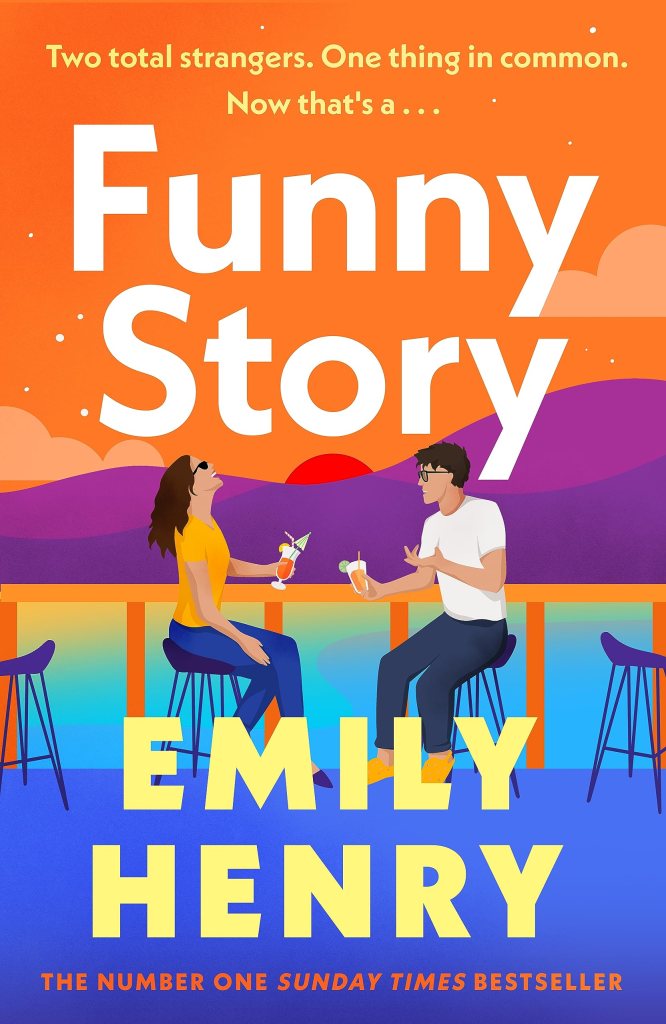
The plot: Daphne always believed that her story would have a happy ending. Right up until her fiance, Peter, realises that he’s in love with his childhood friend, Petra. Stranded in sleepy Waning Bay, Michigan, without friends or family, she becomes room-mates with the worst person imaginable : Petra’s ex, Miles. Scruffy and discombobulated, Miles is the polar opposite of the buttoned up Daphne.
Drowning their sorrows one night, they form a plan: they will pretend to be a couple in order to win Peter and Petra back. But the universe has other plans, and soon the two form a deeper connection than either could have imagined….
What did I think of this book?
2025 was the year I discovered Emily Henry. I’d resisted until then! Unpopular opinion incoming: I believed (incorrectly) that Henry’s novels were a literary kind of TikTok slop – the book equivalent of a Sabrina Carpenter album. However, I enjoyed Great Big Beautiful Life, her latest release, and it made me curious to explore more by her. No, they’re not the most high-brow novels you’ll ever read, but what they display in abundance is heart, warmth and humour.
Funny Story is great. Reading the synopsis, I anticipated a standard boy meets girl rom com (not the first time I did so in 2025!), but like Henry’s other novels, she throws in subtle curveballs to elevate the narrative above standard chick-lit fare.
FS in many ways is a novel about how we write our own story. Some stories (like Peter and Daphne’s) sound good – they’re good on paper, but underneath the surface there’s not a great deal that is good. Daphne’s life revolves around Peter’s. She barely earns enough to live, she has no friends, and they live in HIS home town (which she has never explored). It is very much a one-sided relationship.
When she meets Miles, her initial dislike of him drives her outwards, leading to friendships with work colleagues, a new social calendar, and discovery of the town in which she lives. She begins building something she didn’t have before: a life. The fake relationship with Miles works because essentially, they are in fact very similar: both lonely, both heartbroken, both searching for something. The odd couple dynamic is a well worn trope but here it works, and sets this book apart from others in the genre.
What was most interesting about this book?
I liked that Henry chooses not to tie things up neatly at the end. The ending is a happy one, but it is very much on Daphne’s terms. Her story is not complete, and we feel that new chapters will be added long after we leave. Her journey of self discovery is paused, but not over. She needs her own life more than she needs a man.
What am I going to take away from this book?
That real love comes in many forms. This is something that Henry conveys very well in this novel. What FS does so well is demonstrate that the loves of our life can take the form of a career – in Daphne’s case, as a children’s librarian (why don’t we have those roles in the UK?), friendship, the family we choose rather than the family we are given, or romantic relationships. It is possible to have many different concurrent loves in our lives. The journey to find them is all part of the fun!
What Daphne discovers over the course of the novel is that our lives don’t end when love does: sometimes, it can be only the beginning. Finding love doesn’t have to mean losing yourself. It is possible to live our own lives and keep our interests separate. Daphne learns that she doesn’t need to be solely reliant on one thing (or one person) to make her happy. Her life evolves from being all about Peter to being about a whole array of things: friends, her career, good food. Miles is a nice addition but he never becomes the centre of her world. She learns that love enhances who are are, but it doesn’t define us or make us whole – we are enough just as we are.
Rating: 4/5



 Book and a Brew
Leave a comment